
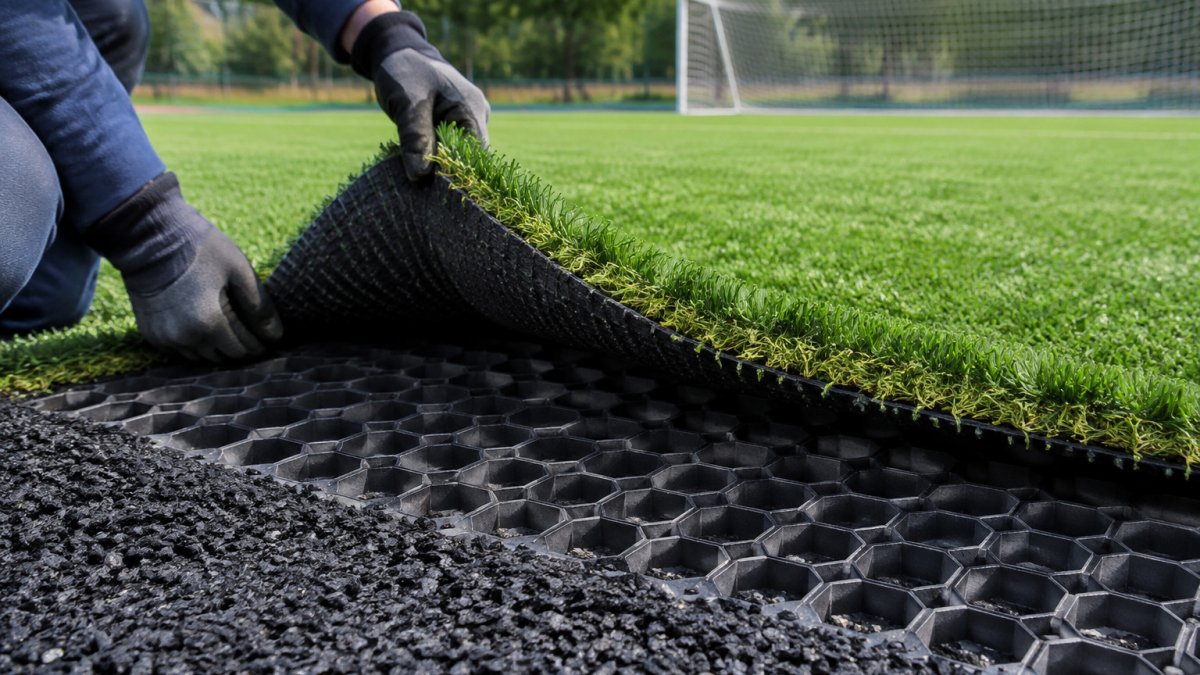
Last Updated: November 4, 2026
Quick Summary
To lower synthetic turf GMAX, first find what is raising it, such as worn or compacted areas, infill pulled to edges or piled in low spots, or sections firmer than the rest. Then groom the surface, top-dress thin spots, decompact high-traffic lanes, and rake infill back to an even layer. Retest the same spots afterward to confirm the result.
- High GMAX readings come from heavy use, compaction, and shifted infill.
- Check goals, corners, and high-traffic lanes for worn, compacted areas first.
- Groom the surface to brush fibers and redistribute infill.
- Measure hardness annually, and retest from the same flagged spots.
- A Gmax target below 150 is a common benchmark.
Table of Contents
- Diagnosing Why Your Synthetic Turf GMAX Is Elevated
- Step-by-Step Maintenance to Lower GMAX
- Verifying the Result with GMAX Testing Equipment and Retest Timing
- Frequently Asked Questions
Diagnosing Why Your Synthetic Turf GMAX Is Elevated
A high GMAX reading means your field is harder than it should be, putting athletes at risk, and the fastest route to a lower synthetic turf GMAX starts with finding the cause. Readings rise with heavy use, compaction, and shifted infill, as the DC Department of General Services GMAX reports on causes of higher readings confirms. Find the cause first: check for worn, compacted areas at goals, corners, and high-traffic lanes; infill pulled toward edges or piled in low spots; and sections firmer than the rest. For a real-world case of a drainage and shockpad system that keeps GMAX consistent, see AirDrain drainage case at Redemption Square in Houston. Sketch problem areas and compare them to the rest of the surface, a single hard spot means local wear, while a field-wide rise points to infill depth or compaction.
Step-by-Step Maintenance to Lower GMAX
Work in this order: groom the surface to brush fibers and redistribute infill; top-dress thin areas and groom it in; decompact high-traffic lanes so packed infill can cushion again; and rake drifted infill back to an even layer. Infill and base-related GMAX variation can also be addressed with the AirDrain GMAX and HIC drainage product. Set a recurring schedule, Cornell’s synthetic turf guidance recommends Cornell University synthetic turf management guidance, including annual hardness measurement, and also points to sweeping and dragging as routine maintenance.
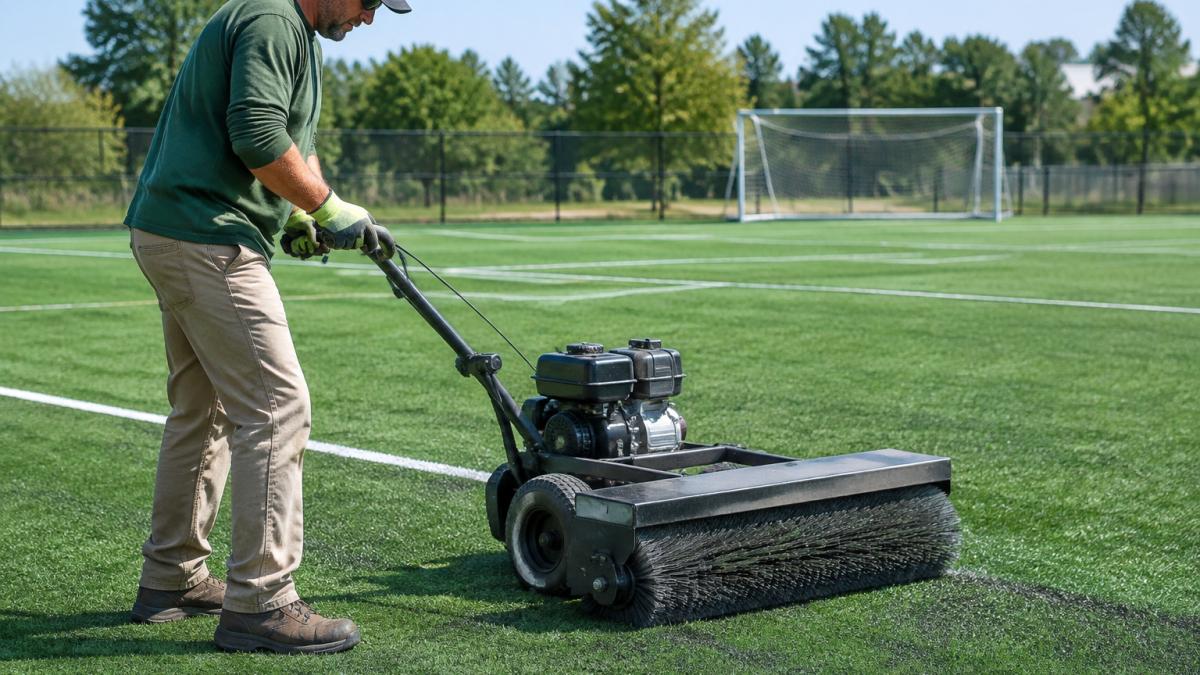
The article lays out the maintenance steps and how often to repeat them.
| Step | What to do | Time or frequency |
|---|---|---|
| Groom | Brush fibers and redistribute infill | Routine |
| Top-dress | Add infill to thin areas and groom it in | As needed |
| Decompact | Loosen high-traffic lanes so infill cushions again | As needed |
| Rake | Return drifted infill to an even layer | As needed |
| Schedule | Follow recurring sweeping and dragging | Recurring |
| Measure | Measure hardness annually | Annual |
Verifying the Result with GMAX Testing Equipment and Retest Timing
Retest from the same spots you flagged so results compare directly, since matching locations make a lower synthetic turf GMAX easy to confirm, and schedule retests after major maintenance or heavy use. Details on testing methods are available in GMAX and HIC testing. Annual hardness measurement is a common minimum practice, with a Gmax target below 150. Compare new readings with your baseline: a drop in problem spots shows the remedy worked; if readings stay high, recheck infill depth and distribution before adding more infill. A documented example of a measured GMAX reduction after drainage work is shown in the AirDrain softball field project. To see how consistent GMAX and shock attenuation hold up over time, review the AirDrain synthetic turf drainage system.
Frequently Asked Questions
How often should synthetic turf be GMAX tested?
Synthetic turf management guidance commonly recommends measuring field hardness at least once a year and keeping results below a Gmax of 150. Fields with heavy use, recent maintenance, or infill changes should be retested sooner, since high use and compaction can raise GMAX values over time. Retest after any corrective work, such as adding infill or grooming, to confirm the reading has actually changed. Keeping a dated log of each test makes it easier to spot a gradual upward trend before it becomes a safety concern for athletes.
Can adding or redistributing infill reduce synthetic turf GMAX?
Yes, but only when the cause is infill condition. Grooming or top-dressing can reduce GMAX values raised by use, compaction, and infill segregation. Start by checking infill depth across the field, since thin or uneven areas often test harder. Add or redistribute infill only where readings and inspection show a shortfall, and avoid overfilling, which can change playing characteristics and create its own maintenance problems.
What is the difference between GMAX and HIC testing?
GMAX measures peak deceleration from a standardized impact test, and HIC, or head injury criterion, is calculated from the same deceleration curve to estimate head injury risk. A low GMAX reading alone does not necessarily establish that a surface is stable. Use both measurements together when evaluating safety, and confirm which standard your testing provider and local rules require before comparing results.
