
Quick Summary
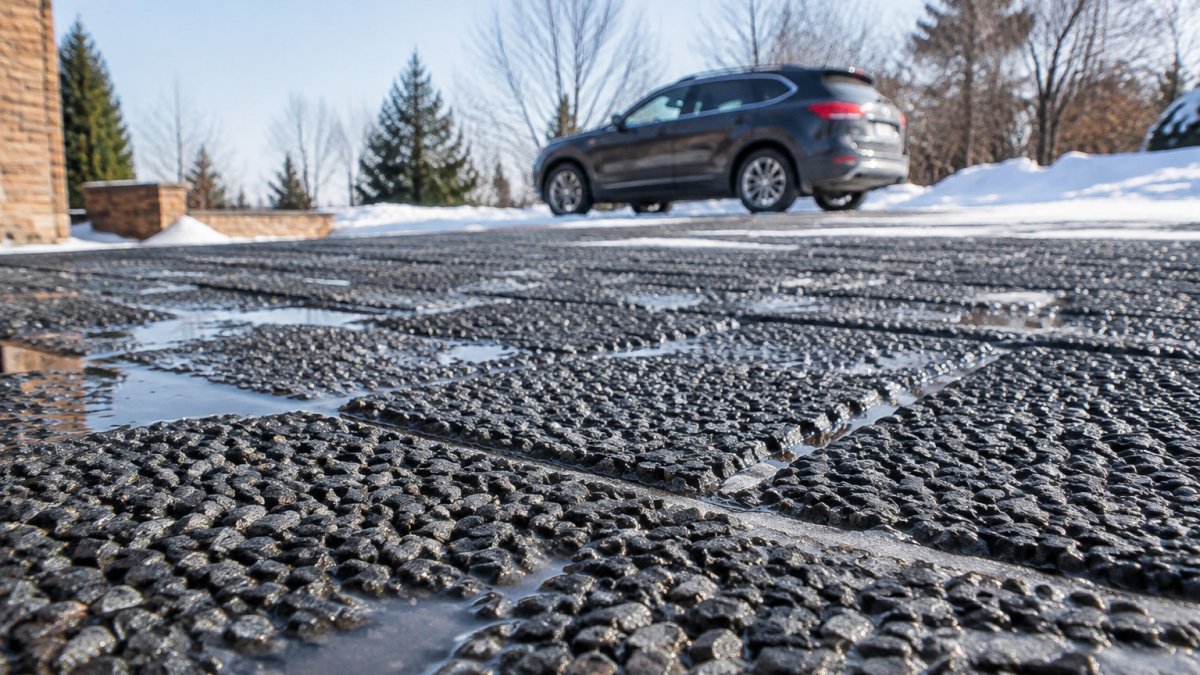
Porous paving durability in freeze-thaw conditions depends more on water movement than on the mix itself. Water that drains into the voids can freeze, expand, and crack the surface, so fast drainage and sound installation are central to long-term performance.
- Porous pavement holds more moisture than dense surfaces, so freezing water pressures the pore walls from within.
- Standard freeze-thaw tests control saturation, which can differ sharply from a well-drained field pavement.
- Ask suppliers how test specimens were conditioned, whether saturated, drained, or sealed.
- Confirm the base drains to an outlet, because a system with no outlet holds water where damage starts.
- Confirm local frost depth before finalizing the base section, since frost often governs base depth in cold climates.
Table of Contents
- How Freeze-Thaw Cycles Affect Porous Paving
- Pervious Concrete Freeze-Thaw Resistance: What the Test Data Shows
- Porous Pavement Lifespan and the Role of Drainage Design
- Permeable Paving Installation Best Practices for Cold Climates
- Winter Maintenance and Deicing Practices for Permeable Pavement
- Planning Freeze-Thaw Durability for Your Next Project
- Frequently Asked Questions
How Freeze-Thaw Cycles Affect Porous Paving
Porous paving handles freeze-thaw damage differently from solid pavement, and the difference shapes every decision about porous paving durability that follows. Water that drains into the pavement’s voids can freeze, expand, and crack the surrounding material, which is why durability in cold climates depends as much on water movement as on the mix itself. According to the review of freeze-thaw durability in concrete pavement, freeze-thaw damage is a major threat to long-term concrete-pavement performance in cold regions.
Water infiltration, expansion and surface damage
The core problem is simple. Porous pavement is designed to let water through, so it holds more moisture than a dense surface would. When that moisture freezes, it expands and pressures the pore walls from within. Repeated cycles of freezing and thawing gradually loosen the surface, which shows up as scaling, raveling, and eventually cracking. Research on freeze-thaw durability of concrete pavement identifies this cycling as the mechanism that drives long-term deterioration.
Pervious Concrete Freeze-Thaw Resistance: What the Test Data Shows
Laboratory results on pervious concrete are more mixed than many product claims suggest, and the reason is that freeze-thaw testing measures a narrow set of conditions that rarely match a real pavement’s exposure. Most standard freeze-thaw tests cycle specimens between a fully saturated state and a frozen state, which is a harsher regime than a well-drained porous system experiences in service. That distinction matters because pervious concrete is designed to drain, so a sample that is allowed to drain between cycles behaves very differently from one held at full saturation.
What freeze-thaw test cycles actually measure
A typical laboratory freeze-thaw test subjects a specimen to repeated cycles of freezing and thawing while monitoring mass loss, length change, and dynamic modulus. The output is a durability factor or a count of cycles to a defined level of deterioration, not a single pass/fail number. The test is generally useful for ranking mixtures against each other, but it does not predict how a specific pavement will perform on a specific site. The reason is that the test controls saturation, temperature gradient, and cycle duration, three variables that a real winter does not hold constant.
Air entrainment and saturation in laboratory results
Air entrainment is the primary defense against freeze-thaw damage in conventional concrete, and it matters in pervious concrete as well, though the mechanism is different. In dense concrete, entrained air voids give expanding ice a place to go. In pervious concrete, the paste between aggregate particles is thin, and the void system is already open, so the role of entrained air is to protect the paste itself rather than the large pores. Some laboratory studies have found poor freeze-thaw resistance when pervious concrete was tested fully saturated, which is a useful caution against assuming any porous mix is inherently protected.
Interpreting lab results against field performance
A common pattern is that pervious concrete that performs well in the field shares three traits: it drains quickly, it was placed with the right paste consistency, and it was cured properly before the first freeze. Laboratory durability factors are a starting point, not a warranty. When comparing suppliers, ask how specimens were conditioned before testing, saturated, drained, or sealed, because that single detail changes the result more than most mix-design variables. For a broader view of how these systems perform over time, see our Porous Paving for Parking Lots: A Complete Guide.
Porous Pavement Lifespan and the Role of Drainage Design
Lifespan is set less by the paving material alone than by how the system moves water. A correctly installed porous system drains quickly, which reduces the time water sits in the pores where it can freeze (Porous Pavement | Extension). The University of Nevada, Reno Extension guidance on porous asphalt and concrete notes that correctly installed porous asphalt and concrete drain rapidly and can help avoid freeze-thaw damage. For a fuller view of how these systems perform over time, see our Porous Paving for Parking Lots: A Complete Guide.
Permeable Paving Installation Best Practices for Cold Climates
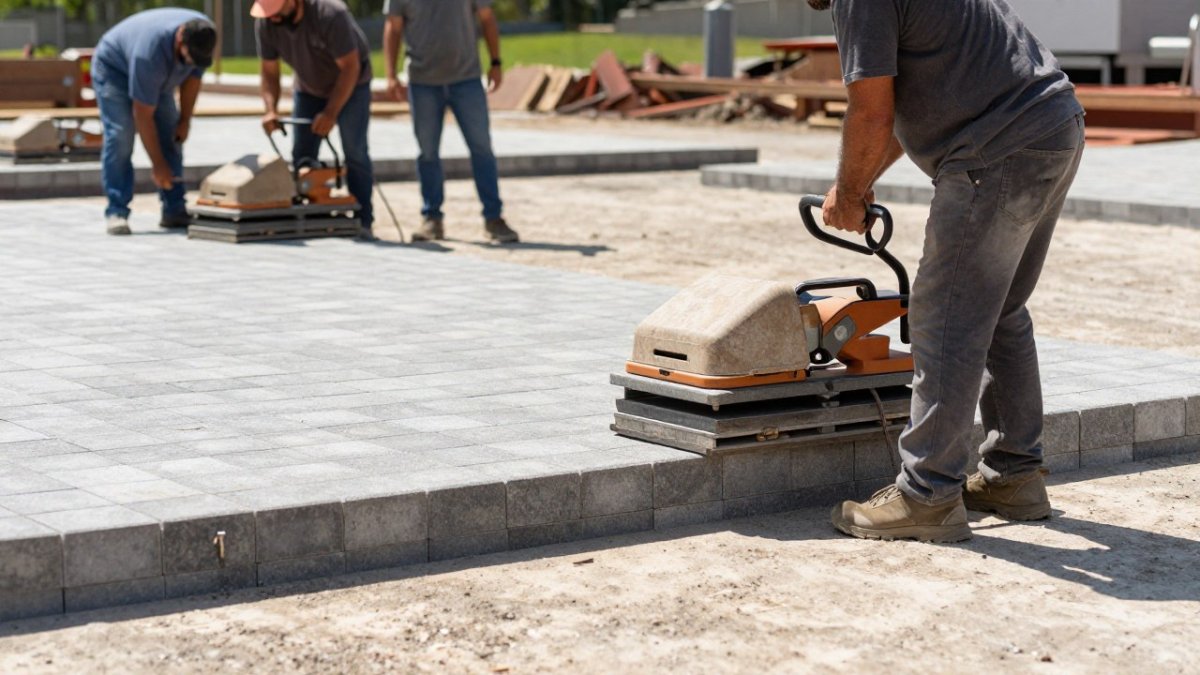
Installation quality decides whether a system performs as its test data predicts, and in cold climates the margin for error is narrower because water has fewer places to go once the ground freezes, which makes porous paving durability hinge on the base. Base preparation, drainage layers, and compaction all affect how water moves through the system once it freezes and thaws.
!A crew of contractors compacting a permeable paver base layer on a sunny job site with a plate compactor and stacked aggregate
Step-by-step checklist for cold-climate installation
- Subgrade preparation. Excavate to the design depth and proof-roll the subgrade. Remove any soft spots and replace them with compactable material. The subgrade should be shaped to drain, not flat, so water does not pond beneath the pavement.
- Base depth and gradation. Use a clean, open-graded aggregate base sized to the structural load and the frost depth. In cold climates, base depth is often governed by frost penetration rather than traffic, so confirm the local frost depth before finalizing the section.
- Compaction. Compact the base in lifts with a plate compactor or vibratory roller. Over-compaction can crush aggregate and reduce permeability; under-compaction leaves voids that settle later.
- Drainage and outlet. Confirm that the base drains to an outlet, daylight, or storage layer. A system with no outlet is a bathtub, and a bathtub is where freeze-thaw damage starts.
- Separation and filter layers. Use a geotextile or filter aggregate between the subgrade and base where fines could migrate. Fines migration is a common cause of clogging and reduced drainage over time.
- Paving course placement. Place pervious concrete, porous asphalt, or permeable pavers according to the manufacturer’s or specifier’s requirements. For pervious concrete, control paste consistency and cure time before the first freeze.
Diagnosing early frost damage
Watch out: early frost damage often looks like surface raveling, scaling, or localized cracking within the first winter, and it is frequently traced to one of three installation errors, a base that does not drain, a subgrade that was not compacted, or a paving course placed too late in the season to cure. Inspect the surface and drainage outlets after the first thaw and compare the pattern of damage to the installation record. If damage is concentrated at low points or near outlets, the cause is drainage; if it is uniform across the surface, the cause is more likely mixture or curing.
Specification details also matter. Our flexible porous paving specification lists the CSI section numbers and structural requirements for grass-paved fire lanes and overflow parking, and the AirPave grass paver installation at New Orleans Botanical Garden shows how a reinforced system performs in service.
The checklist below summarises the cold-climate installation steps the article describes, with the timing or check for each.
| Step | What to do | Check or timing |
|---|---|---|
| Subgrade preparation | Excavate to design depth, proof-roll, replace soft spots | Shape subgrade to drain, not flat |
| Base depth and gradation | Use clean, open-graded aggregate sized to load and frost depth | Confirm local frost depth before finalizing |
| Compaction | Compact base in lifts with plate compactor or vibratory roller | Avoid over-compaction and under-compaction |
| Drainage and outlet | Confirm base drains to an outlet, daylight, or storage | System with no outlet is a bathtub |
| Separation and filter layers | Use geotextile or filter aggregate where fines could migrate | Fines migration causes clogging over time |
| Paving course placement | Place pervious concrete, porous asphalt, or pavers per requirements | Control paste consistency and cure before first freeze |
Winter Maintenance and Deicing Practices for Permeable Pavement
Winter operations can undo good design if they are handled carelessly. Salt and abrasives that wash into the pores can change how water behaves during freezing, so maintenance plans should be written before the first freeze, not after the first failure. Clear the surface promptly, avoid heavy sanding that clogs voids, and inspect drainage after each thaw. Maintenance schedules also feed directly into lifecycle cost, which is worth modeling at the planning stage.
Planning Freeze-Thaw Durability for Your Next Project
Start by matching the system to your climate, expected traffic, and drainage goals. Compare laboratory data with field performance rather than relying on a single figure, and ask suppliers how their test samples were conditioned. Factor in installation timing, winter maintenance, and whether the project needs to meet LEED credit requirements. Our installation timeline steps help plan scheduling, and the guide on whether porous paving earns LEED certification covers the credit side. Most projects that struggle in freeze-thaw conditions trace the problem back to drainage design or installation, not to the material itself.
Frequently Asked Questions
How long does porous pavement last?
Service life depends on material, subgrade, drainage and maintenance. The research reviewed here does not provide a verified lifespan figure for porous pavement in freeze-thaw climates, so treat any single number with caution. Clogging-resistant permeable pavement has been reported as highly freeze-thaw resistant in a 2023 study in Construction and Building Materials, which suggests formulation matters. For a project-specific estimate, ask AirField Systems for guidance on your site conditions and expected traffic, and review the maintenance schedule against your climate.
What type of concrete is more resistant to freeze-thaw cycles?
Research indicates that formulation strongly influences freeze-thaw performance. Air-entrained mixes and well-designed pore structures also support resistance. Because laboratory results vary with saturation and exposure, request test data for the specific mix you plan to specify before final selection.
Does water trapped in porous pavement cause freeze-thaw damage?
Water that stays in the pore structure and freezes can expand and cause surface scaling, cracking and raveling. Freeze-thaw damage is a recognized long-term threat in cold regions. Good drainage limits how long water remains in the system. Correctly installed porous asphalt and concrete drain rapidly and can help avoid freeze-thaw damage.
