
Quick Summary
Recycled geocell systems are honeycomb-shaped grids that confine infill and spread loads across weak ground, so they resist rutting and stay firm on soft subgrade. Their value is highest where base material quality is low, and they suit budget-constrained projects. Whether they are worth the investment depends on soil conditions, load requirements and a project-specific cost comparison.
- AirDrain and AirPave are built from 100% recycled post-manufactured content.
- Geocell confines infill in three dimensions, while geogrid reinforces in two.
- Research found geocell gains can matter most when the base material is lower quality.
- Confinement only works when cells are filled and anchored correctly.
- Start with soil conditions and load requirements before comparing costs on the actual project.
Table of Contents
- What Recycled Geocell Systems Do in Practice
- Geocell vs. Gravel and Geocell vs. Geogrid: Where Each Wins
- Geocell Lifespan, Erosion Control and the Long-Term Value of Recycled Geocells
- Frequently Asked Questions
What Recycled Geocell Systems Do in Practice
Last Updated: November 17, 2026
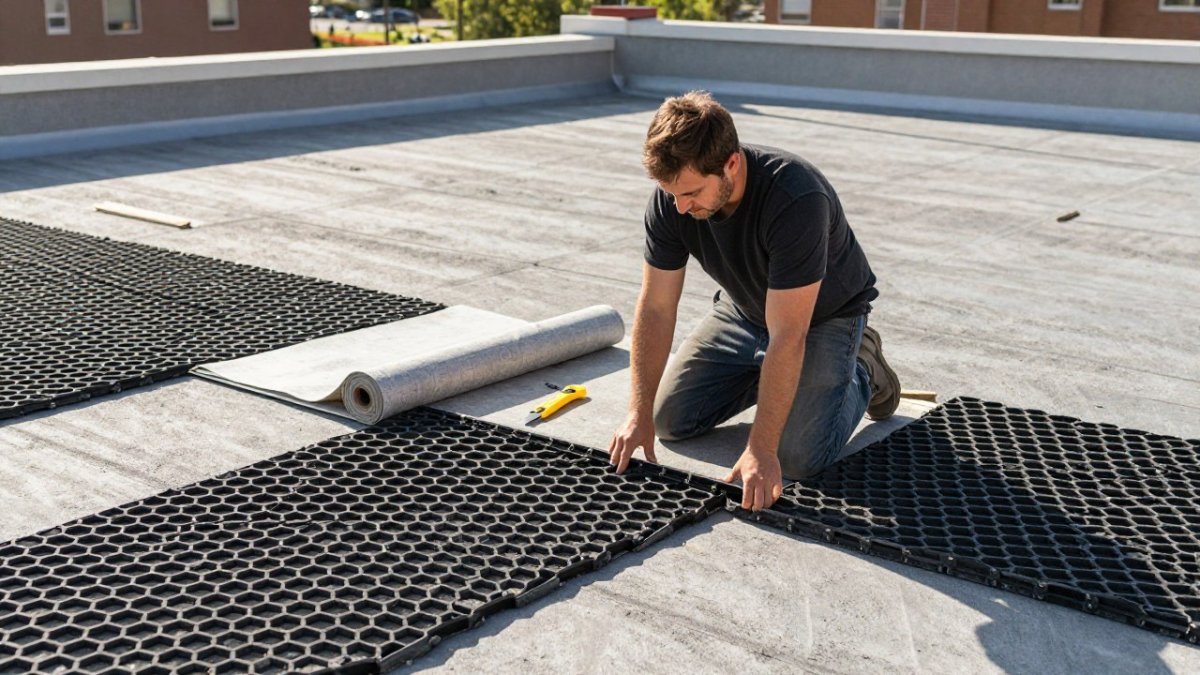
Recycled geocell systems are honeycomb-shaped grids that confine infill and spread loads across weak ground. AirDrain and AirPave are built from 100% recycled post-manufactured content, and the same cellular structure drives both. The cells hold gravel or sand in place, so the surface resists rutting and stays firm on soft subgrade. For the concrete steps to install it on a sports field, see step-by-step sports field installation.
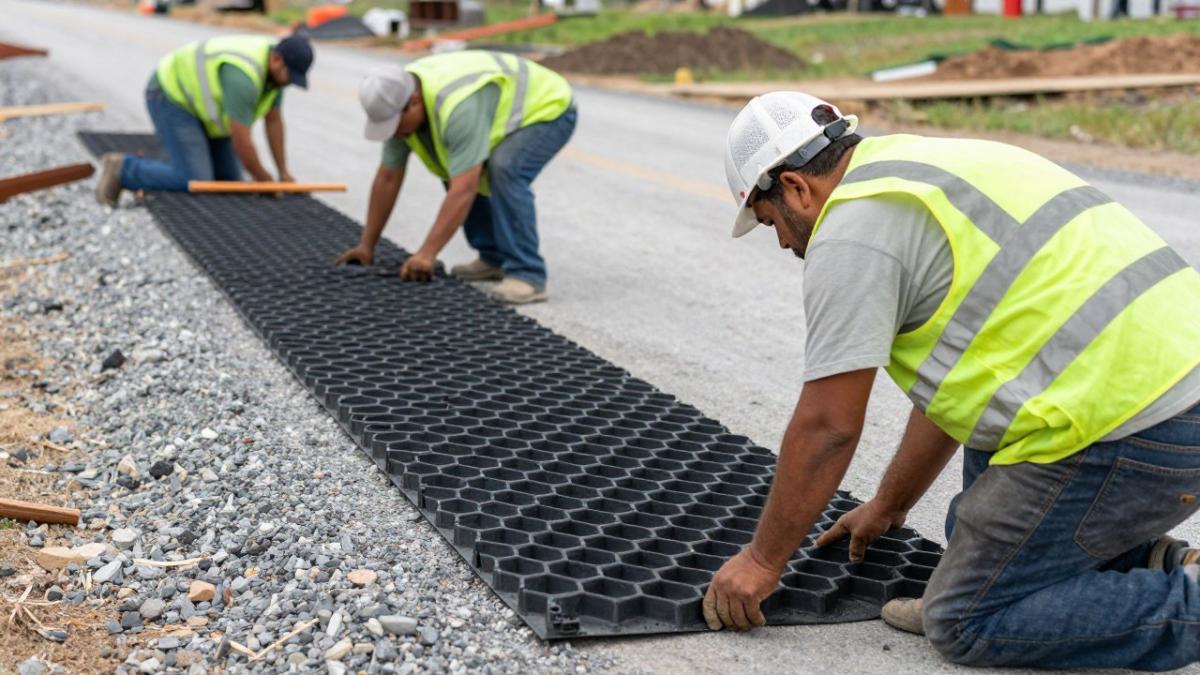
Research from the University of Texas at El Paso geocell pavement study found that geocell-related bearing-capacity gains can matter most when the base material is lower quality. That makes the approach relevant to budget-constrained projects.
Geocell vs. Gravel and Geocell vs. Geogrid: Where Each Wins
Geocell is not a universal replacement for gravel or geogrid; each solves a different problem. For a full guide to porous paving for parking lots as another surface option, see the complete overview. Gravel alone needs more depth to carry load, and geogrid reinforces in two dimensions. To see how long the work takes on a golf course before you decide, read golf course installation timelines. Geocell confines infill in three dimensions.
| Option | Strength | Limitation |
|---|---|---|
| Gravel base | Simple, familiar | Needs more depth and imported aggregate |
| Geogrid | Two-dimensional reinforcement | Less lateral confinement |
| Geocell | Three-dimensional confinement | Requires careful infill selection |
Confinement only works when cells are filled and anchored correctly, so installation quality decides the result.
Start with soil conditions and load requirements, then compare costs on the actual project. Pricing depends on quantity, dates, and delivery; request a current quote from AirField Systems for pricing.
Geocell Lifespan, Erosion Control and the Long-Term Value of Recycled Geocells
Long-term value depends on material durability, erosion control performance and how much imported aggregate the design avoids. Ask for documented performance data for your conditions, and request a current quote from AirField Systems for pricing.
For a buying path, see how to buy recycled geocell for sports fields. Confirm the design basis first, then weigh lifecycle value against upfront cost.
Frequently Asked Questions
How long do geocells last?
Geocell lifespan depends on the polymer, exposure to ultraviolet light, and how the cells are buried or filled. Most HDPE geocell systems are designed for long service life when they are fully confined by infill and protected from direct sun. Ask your supplier for product-specific durability data and independent test results, and confirm the expected service life against your project’s design life before specifying a system.
Can recycled geocells reduce the amount of aggregate needed?
Yes, cellular confinement can reduce the depth of aggregate needed on a weak subgrade because the cells spread load and hold infill in place. The actual reduction depends on subgrade strength, traffic loads and infill type, so it should be confirmed through a project-specific design. Compare the engineered base depth with and without geocell before estimating material savings.
Are geocell systems suitable for drainage and erosion control?
Geocell systems are often used on slopes and channels to hold infill in place and resist surface erosion, and they can support vegetation establishment. Their performance depends on slope steepness, water flow rates and proper anchoring. Confirm the design with a qualified engineer for high-flow or steep-slope conditions before installation.
