
Last Updated: November 4, 2026
Quick Summary
Porous paving is a surface that lets rain soak through its pores or joints into a stone reservoir and then into the soil, instead of running off into storm drains. It suits low-speed, low-volume parking such as overflow lots, and it reduces stormwater runoff when it is cleaned on a regular schedule.
- Porous asphalt has been reported to reduce surface runoff by up to 90 percent, depending on site conditions.
- Sediment is the main threat and can clog the aggregate layers and the pavement itself.
- Overflow parking, pedestrian areas and low-speed residential zones are suitable settings.
- Vacuum sweeping on a regular schedule is the standard measure to prevent clogging.
- Test soil infiltration early, since a slow-draining soil can turn the lot into a pond.
Table of Contents
- What Porous Paving Is and How Water Moves Through It
- Stormwater Runoff Reduction and Water Quality Benefits
- Porous Asphalt, Pervious Concrete, and Permeable Pavers Compared
- Site Suitability and Parking Lot Applications
- Permeable Parking Lot Design Standards and Site Assessment
- Porous Paving for Parking Lots Cost and Lifecycle Considerations
- Permeable Pavers Maintenance Schedule and Troubleshooting Clogging
- Planning Your Next Porous Parking Lot Project With AirField Systems
- Frequently Asked Questions
Porous paving for parking lots lets rain soak through the surface instead of running off into storm drains, and it has become one of the most practical tools for managing stormwater on commercial and municipal sites in the United States. This guide walks through how porous paving systems function, where they fit, and what to weigh before specifying them.
What Porous Paving Is and How Water Moves Through It
Porous paving is a surface that allows water to pass through its pores or joints into an underlying stone reservoir, where it can infiltrate into the soil. The Environmental Protection Agency describes permeable pavement as a way to manage stormwater at the source, and its experimental parking lot project was designed to document how three permeable systems, including porous asphalt and pervious concrete, actually perform. EPA experimental permeable pavement parking lot and rain garden project
Water moves downward through the surface, then through the aggregate, and then into the subgrade. Each layer has a job, and the system works only when all of them are sized and installed correctly.
Layers of a Permeable Pavement System
A typical section includes the wearing surface, a bedding or choker course, a stone reservoir that stores water temporarily, and a geotextile separating the reservoir from the native soil. The reservoir depth depends on design storm volume and soil infiltration capacity, not on a fixed rule of thumb.
Sedimentation is the main threat to this stack. The University of Florida IFAS technical publication warns that sediment can prematurely clog aggregate layers and the pavement itself, and that stormwater runoff should be directed away from the installation area. University of Florida IFAS permeable pavement technical considerations
How Infiltration Rate Is Determined
Infiltration rate is measured on the installed surface and the underlying soil, and it governs how quickly the system can drain a storm event. Design teams typically test the subgrade before finalizing the reservoir depth, because a slow-draining soil can turn a permeable lot into a temporary pond. Treat the infiltration test as the starting point of the design, not a box to check at the end.
Stormwater Runoff Reduction and Water Quality Benefits
The primary benefit of porous paving is runoff reduction. Porous asphalt systems have been reported to reduce surface runoff by up to 90 percent in parking areas and driveways, though results depend heavily on site conditions and maintenance. My Rain Plan porous asphalt guide
In a study of three permeable pavements installed in a Mississauga parking lot, peak flow reductions ranged between 39 and 84 percent for storm events. Results like these explain why permeable paving is often counted as one component of broader green parking-lot designs, which the Green Building Alliance says can include rain gardens, trees, and other elements alongside permeable paving. Readers asking whether porous paving earns LEED certification can look at how these stormwater benefits are credited. Green Building Alliance permeable pavement guidance
Water quality benefits follow from the same mechanism. Water that infiltrates is filtered through the stone reservoir and soil rather than carrying sediment and pollutants directly into receiving waters. The benefit holds only if the surface stays clean, which is why maintenance is part of the stormwater case, not an afterthought.
Porous Asphalt, Pervious Concrete, and Permeable Pavers Compared
The three main material families serve similar functions but behave differently under load, in cold weather, and during maintenance. The right choice usually comes down to traffic loading, the maintenance budget the owner will actually fund, and how the lot will be used over its service life.
Porous Asphalt
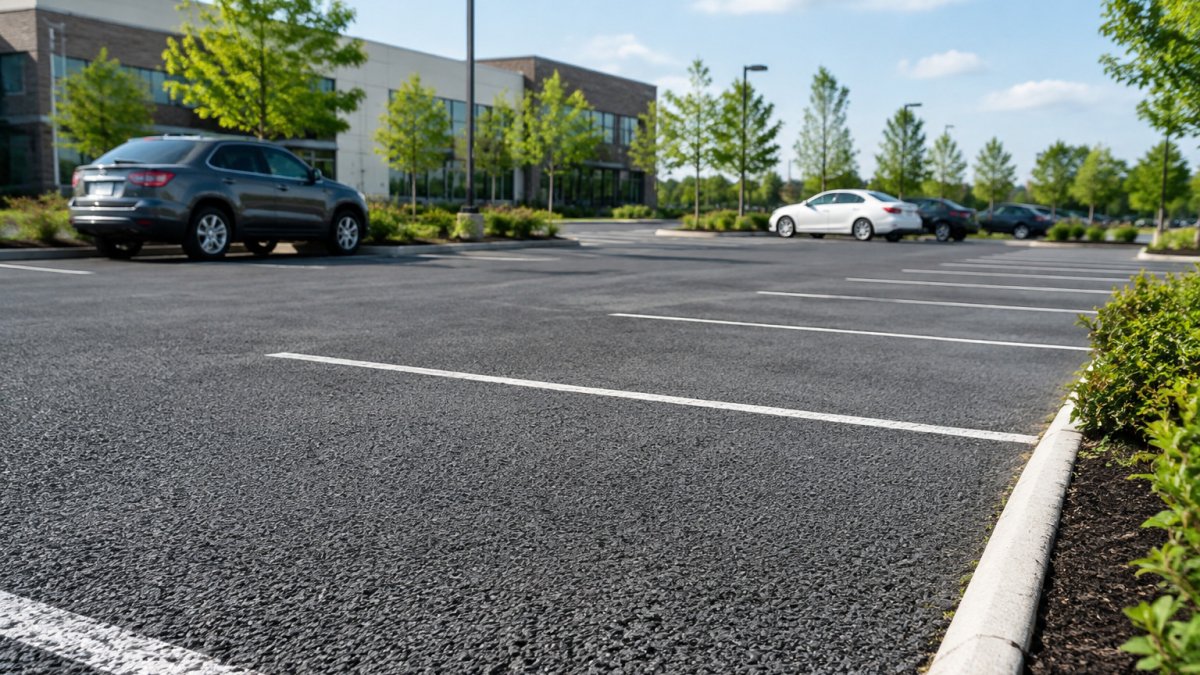
Porous asphalt is poured like conventional asphalt but with most of the fine aggregate removed, leaving an open void structure that typically runs in the high-teens to low-twenties percent air voids. It is familiar to paving crews, produces a smooth ride, and works well for large lots and long drive aisles. Because the surface is continuous, it distributes wheel loads across the stone reservoir rather than concentrating them at joints.
- Best fit: Large commercial and municipal lots, overflow parking, drive aisles, and sites where a smooth, continuous surface matters.
- Load behavior: Suitable for passenger vehicles and light trucks when the subbase is designed for the traffic; heavy-vehicle lanes and loading zones need a thicker section and a structural engineer’s review.
- Maintenance: Requires regular vacuum sweeping. Without it, fines work into the void structure and infiltration drops.
- Watch out: Porous asphalt is sensitive to placement temperature and compaction; a mix that cools too much before rolling can leave a tight, low-void surface that never drains as designed.
Pervious Concrete
Pervious concrete uses a coarse aggregate mix with little or no fine sand, so water passes through the matrix itself. Void content commonly runs around 15 to 25 percent, and the rigid slab can carry substantial loads when the subbase and thickness are engineered for them. It is more sensitive to placement and curing than asphalt: the mix has a narrow workability window, and improper curing can reduce both strength and permeability.
- Best fit: Parking stalls, low-speed drives, and sites where a rigid, high-void surface is preferred and the contractor has pervious concrete experience.
- Load behavior: Can be designed for heavier loads than many owners assume, but the design must account for both the slab and the reservoir beneath it.
- Maintenance: Vacuum sweeping on a regular schedule; the surface can be restored with targeted cleaning when clogging appears.
- Watch out: Pervious concrete placed in hot, dry, or windy conditions can dry out before finishing, producing a weak surface that fails early; curing covers and misting are not optional.
Permeable Interlocking Pavers
Permeable pavers are interlocking units set on an open-graded base, with joints or openings that let water drain between them. They allow spot repairs and can be lifted and reset, which matters for utility access and for fixing localized settlement. The trade-off is more joints to maintain and the potential for weeds or joint aggregate loss in open-joint designs.
- Best fit: Parking stalls, overflow areas, pedestrian and emergency-access zones, and sites where utility access or future reconfiguration is likely.
- Load behavior: Suitable for passenger vehicles and, with the right base and units, for heavier vehicles; the base design matters as much as the paver.
- Maintenance: Vacuum sweeping plus periodic joint aggregate replenishment; joints should be checked after heavy storms and refilled with the specified aggregate.
- Watch out: Joints that wash out or are never refilled let sediment reach the reservoir, and the surface can begin to pond even though the pavers themselves are fine.
How to Choose
Choosing among them is less about which is best in general and more about which matches traffic loads, maintenance capacity, and local climate. A practical decision sequence:
- Confirm the traffic. Passenger vehicles, light trucks, and heavy vehicles each call for different section designs; emergency and service access must be rated, not assumed.
- Match the maintenance budget. All three need cleaning, but the frequency and equipment differ; an owner who will not fund sweeping should not specify a system that depends on it.
- Check climate and winter operations. Freeze-thaw cycles, plowing practices, and deicing materials affect all three, but the details differ by surface type.
- Consider utility access. If the lot is likely to be opened for repairs, pavers are easier to lift and reset than a continuous surface.
- Verify local approval. Some jurisdictions restrict which surfaces are allowed, so confirm before finalizing the material.
A material that fits the site and the owner’s maintenance capacity will outperform a technically superior material that is never cleaned.
Site Suitability and Parking Lot Applications
Permeable paving suits selected low-volume, low-speed parking uses rather than every parking application. The Metropolitan Area Planning Council identifies overflow parking areas among the settings where permeable paving is appropriate, along with pedestrian-only areas and residential low-volume, low-speed zones. MAPC permeable paving fact sheet
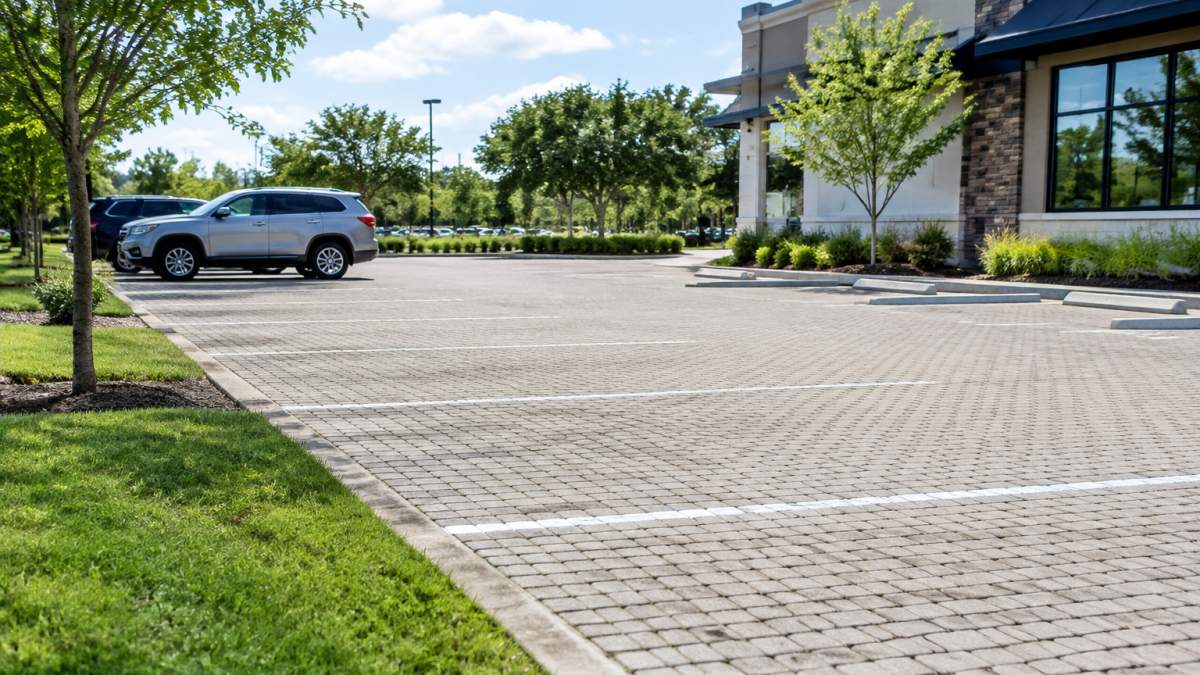
Heavy-vehicle lanes, high-turnover retail stalls, and loading zones call for more careful evaluation of material strength and subbase design. The Grass Fire Lane product page shows the flexible porous paving solution for fire lanes, emergency vehicle access, overflow parking, and reinforced turf.
Permeable Parking Lot Design Standards and Site Assessment
Design starts with a site assessment: soil infiltration testing, groundwater depth, slope, drainage patterns, and the design storm the local authority requires. Local rules can also restrict which surfaces are allowed at all. Local development guidance can prohibit certain porous surfaces, which shows that permitting is jurisdiction-specific.
Before finalizing a design, confirm the requirements with your local stormwater authority, check whether the project can claim stormwater credits, and verify the load rating for any emergency or service vehicle access. For a step-by-state view of how long each phase takes, see the porous paving installation timeline steps.
Porous Paving for Parking Lots Cost and Lifecycle Considerations
Pricing for porous paving depends on material type, quantity, subbase depth, site access, and delivery timing, so AirField Systems does not publish a fixed price here. For current pricing or a quote tailored to your project, contact AirField Systems directly through its website.
What most guides skip is the total cost of ownership. A permeable lot is not just a surface; it is a stormwater system, and the budget has to cover construction, maintenance, rehabilitation, and the stormwater infrastructure the lot replaces or avoids.
Cost Components to Compare
When you compare bids, break the number into the same components for every option:
- Surface material and placement. The wearing course, bedding or choker course, and labor to place them.
- Stone reservoir and subbase. Excavation, aggregate, geotextile, and compaction; reservoir depth is driven by the design storm and soil infiltration, so it varies widely by site.
- Stormwater appurtenances. Underdrains, outlet structures, and overflow provisions where the design requires them.
- Site preparation and access. Removal of existing pavement, grading, and the cost of staging equipment on a constrained lot.
- Permitting and design fees. Stormwater review, infiltration testing, and any engineering required by the local authority.
Lifecycle Cost: What to Carry for the Life of the System
Lifecycle cost is where permeable paving often differs most from conventional pavement. Avoided stormwater infrastructure, such as detention ponds or extended pipe runs, can offset part of the surface cost, while the added maintenance budget for cleaning must be carried for the life of the system. Compare total cost over the expected service life, not just installed cost per square foot. Beyond these fiscal considerations, the broader environmental and aesthetic benefits of permeable paving extend the value of such installations well past the parking lot perimeter.
A practical way to build the comparison:
- Initial construction. Use the component breakdown above so every option is priced on the same basis.
- Routine maintenance. Estimate vacuum sweeping frequency and cost per visit, plus joint aggregate replenishment for pavers.
- Rehabilitation. Estimate when the surface will need restoration or replacement and what that costs; pavers can be lifted and reset, while continuous surfaces are typically milled or replaced.
- Stormwater infrastructure avoided. If the permeable lot replaces a detention pond, pipe run, or other control, carry that avoided cost as a credit in the comparison.
- Service life. Use the expected life of each system, not a single year’s cost, so the comparison reflects the full period.
A Common Pattern
Permeable paving’s installed cost per square foot can run higher than conventional asphalt for the surface alone, but the gap may narrow or reverse when avoided stormwater infrastructure and land use are counted. The maintenance line is the one owners most often underestimate; a lot that is never swept will clog and lose infiltration, and restoring it costs more than the cleaning that would have prevented the problem.
Watch out: A bid that looks low because it omits the stone reservoir, underdrains, or the first years of sweeping is not a comparable number; insist on a line-item breakdown before you compare totals.
Budgeting for Maintenance
Set the maintenance budget at the design stage, not after construction. A schedule that is funded and followed prevents most clogging failures before they start, and it keeps the stormwater performance the lot was permitted for. If the owner cannot commit to the schedule, that is a signal to reconsider the material or the design, not to defer the cleaning.
Permeable Pavers Maintenance Schedule and Troubleshooting Clogging
Clogging is the most common failure mode, and the IFAS technical publication identifies sedimentation as the leading cause. Vacuum sweeping on a regular schedule, with more frequent cycles in areas near construction or unstabilized soil, is the standard preventive measure.
If ponding appears, inspect for sediment buildup on the surface first, then check whether runoff from adjacent areas is flowing onto the installation, which the same IFAS publication recommends avoiding.
The article’s main maintenance and troubleshooting points are summarized below.
| Problem | Cause | Fix |
|---|---|---|
| Clogged surface | Sediment buildup in pores and joints | Regular vacuum sweeping |
| Joint aggregate loss | Washed-out joints in pavers | Refill with specified aggregate |
| Ponding after storms | Clogging, not a design flaw | Targeted cleaning; inspect for sediment |
| Runoff entering installation | Adjacent runoff flowing onto the area | Redirect runoff away from installation |
| Premature clogging of layers | Sedimentation from unstabilized areas | Sweep more often near construction or bare soil |
Planning Your Next Porous Parking Lot Project With AirField Systems
A permeable parking lot project works best when design, material selection, and maintenance planning are settled together. Start with a site assessment, confirm local permitting, select a material that fits your traffic and climate, and commit to a cleaning schedule before construction begins.
AirField Systems produces AirPave porous flexible paving and the AirDrain drainage system, both made in the United States with 100 percent recycled content and designed for quick-connector assembly and efficient shipping. Its porous flexible paving is documented in a specification that can be used during design. To discuss your site, request pricing, or confirm fit for your application, contact AirField Systems directly.
Frequently Asked Questions
What drawbacks are there to using porous pavement?
Porous pavement can clog with sediment, fine debris and leaves, which reduces infiltration over time. The University of Florida IFAS technical publication warns that sedimentation can prematurely clog both the pavement and aggregate layers, and that runoff should be directed away from the installation area. Maintenance, typically periodic vacuum sweeping, is required to preserve drainage performance. Installation also demands careful subgrade preparation, and local rules may restrict certain surface types, so confirm code requirements with your jurisdiction before specifying the system.
How much does porous paving for parking lots cost?
Pricing depends on quantity, material type, subbase depth, site conditions, dates, and delivery. Because costs vary widely from project to project, AirField Systems does not publish a standard price for porous paving. For current pricing or a project-specific quote, visit the AirField Systems website and request a quote based on your site dimensions and intended parking loads. Comparing lifecycle costs, including maintenance over the system’s service life, gives a more useful picture than comparing installation prices alone.
What is the expected maintenance schedule for permeable pavers?
Permeable pavers generally need periodic cleaning to keep voids open. Vacuum sweeping of the surface, typically on a recurring schedule set by the site’s sediment load, helps prevent clogging. Keeping runoff from adjacent unstabilized areas away from the pavement limits the sediment that reaches it. Inspect the surface after heavy storms and at least once per season for ponding, which can signal early clogging. Your maintenance plan should match the system type and the conditions of your specific site.
How does porous paving contribute to stormwater management?
Porous paving lets rainfall infiltrate through the surface into an aggregate reservoir, reducing surface runoff. In a Mississauga parking lot study, three permeable pavements reduced peak flows between 39% and 84% for storm events. Porous asphalt systems have been documented to reduce surface runoff by up to 90% in parking areas and driveways. Local stormwater requirements and any credits available should be confirmed with the authority having jurisdiction.
