
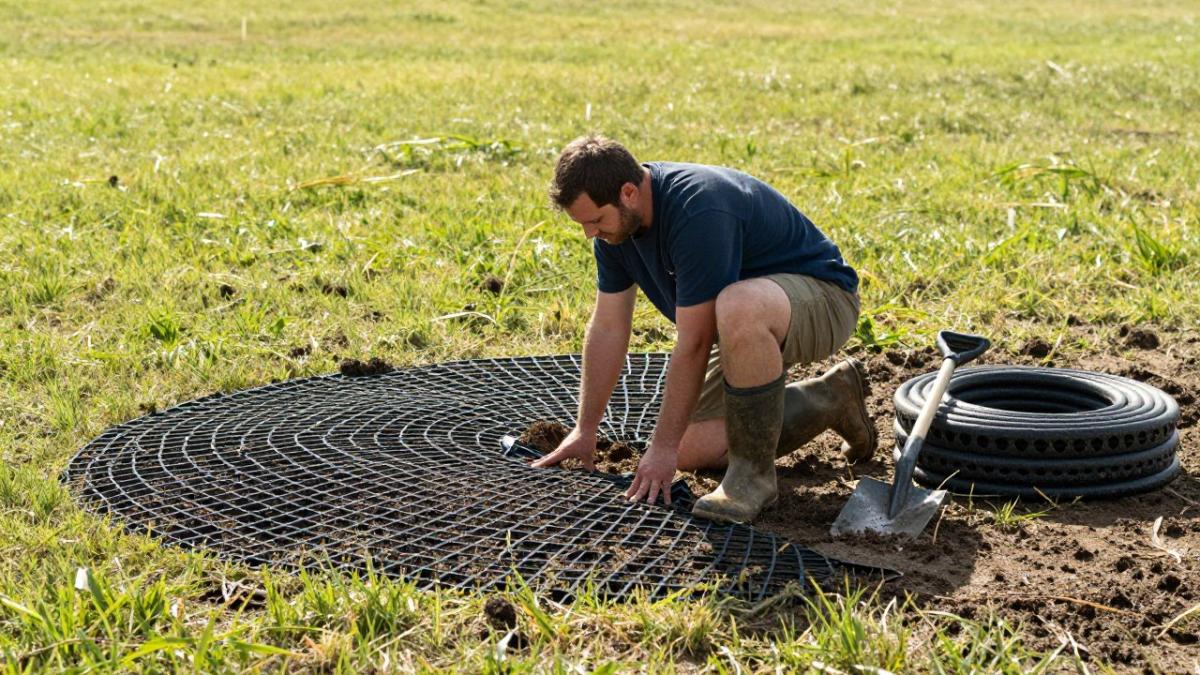
Quick Summary
To drain waterlogged sports fields, first find the cause: poor surface drainage, compacted soil, or weak internal drainage. Then use quick fixes like aerating and top-dressing with sand to restore play, and plan permanent drain lines with a carrier pipe and lateral drains.
- Walk the field after a storm and note where puddles form.
- Keep players off the wet area until it dries.
- Use a core aerator or slit tool to open the surface.
- Install a main carrier pipe to a suitable outlet, then lay lateral drains at regular spacing.
- Test how fast water moves through the root zone, then size drains to match.
Table of Contents
- Diagnosing Why Your Sports Field Holds Water
- How to Drain Waterlogged Sports Fields: Immediate and Permanent Steps
- Planning the Drainage Design and Keeping It Working
- Frequently Asked Questions
Diagnosing Why Your Sports Field Holds Water
Last Updated: November 24, 2026
Waterlogged sports fields are common, and the fix depends on why water is sitting there. Before you dig, find the cause, so you know how to drain waterlogged sports fields properly.
Standing water usually comes from one of three problems:
- Poor surface drainage. The field is too flat or has no path off the playing area.
- Compacted soil. Heavy use packs soil so water cannot soak down.
- Weak internal drainage. Water moves through soil too slowly to clear after rain.
Walk the field after a storm and note where puddles form. Dig small test holes to watch drainage speed, and check slope and edges; pooling near the middle often signals a grading issue.
Don’t treat every wet spot the same: surface problems need grading or slit drainage, subsurface problems need drain lines. Matching fix to cause makes repairs last.
How to Drain Waterlogged Sports Fields: Immediate and Permanent Steps
Start with quick steps to restore play, then plan a permanent repair.
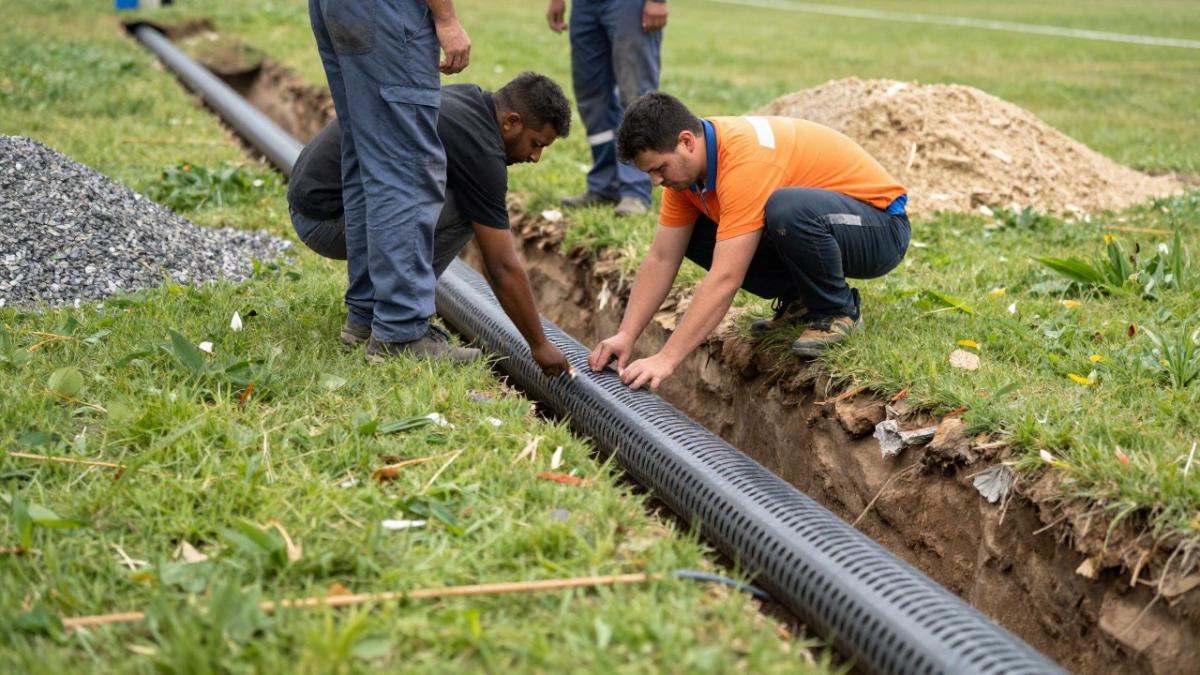
Immediate steps (after heavy rain):
- Keep players off the wet area until it dries.
- Use a core aerator or slit tool to open the surface.
- Clear clogged outlets and surface channels.
- Top-dress low spots with sand to improve runoff.
Permanent steps:
- Install a main carrier pipe to a suitable outlet.
- Lay lateral drains at regular spacing.
- Backfill trenches with gravel or pea stone.
- Restore and water in the turf.
Surface fixes help but don’t replace a working drain system. See how the AirDrain option is applied across natural and artificial sports fields. For lasting results, many managers choose a permanent natural grass drainage system, like the AirDrain Agronomic Drainage Natural Grass Installations option.
The article breaks the repair into quick fixes for play and permanent steps, summarised below.
| Step | What to do | Timing |
|---|---|---|
| Keep players off | Keep players off the wet area until it dries | Until dry |
| Aerate or slit | Use a core aerator or slit tool to open the surface | Immediate |
| Clear outlets | Clear clogged outlets and surface channels | Immediate |
| Top-dress low spots | Top-dress low spots with sand to improve runoff | Immediate |
| Install carrier pipe | Install a main carrier pipe to a suitable outlet | Permanent |
| Lay lateral drains | Lay lateral drains at regular spacing | Permanent |
| Backfill trenches | Backfill trenches with gravel or pea stone | Permanent |
| Restore turf | Restore and water in the turf | Permanent |
Planning the Drainage Design and Keeping It Working
Test how fast water moves through the root zone, then size drains to match so fields clear within a day or two. The agronomic drainage white paper explains the sand-profile research behind this approach.
Keep drain lines away from high-traffic goal mouths when possible, and ensure every line has a clear outlet.
Review the company’s brochures and submittals for specifications before committing to a design. Then maintain with regular aeration, clearing outlets, and seasonal grade checks. Check the synthetic turf safety data points before any drainage work on a synthetic field.
Frequently Asked Questions
How long does it take a waterlogged sports field to dry?
Drying time depends on soil type, rainfall, drainage capacity and how much water the field has absorbed. Sandy soils often clear surface water within hours once rain stops, while heavy clay can hold standing water for days. Keep the field closed to play until the surface is firm and free of standing water.
Can you play on a waterlogged sports field?
Playing on a waterlogged field damages turf, compacts the soil further and raises injury risk because footing becomes unstable. Standing water also makes surfaces slippery and uneven. Close the field until surface water has drained and the ground can take foot traffic without deep marking. Repeated play on soft ground slows recovery, so a short delay usually protects the field and players over the season.
What is the safest way to remove standing water from a sports field?
Start with low-risk steps such as stopping play, redirecting foot traffic and using gentle surface removal. Verti-draining can help relieve waterlogging, but it is a quick aid rather than a primary solution. Avoid heavy machinery on saturated turf, since it can deepen compaction. For lasting results, identify the cause first and then plan a subsurface drainage upgrade with a qualified contractor.
