
Quick Summary
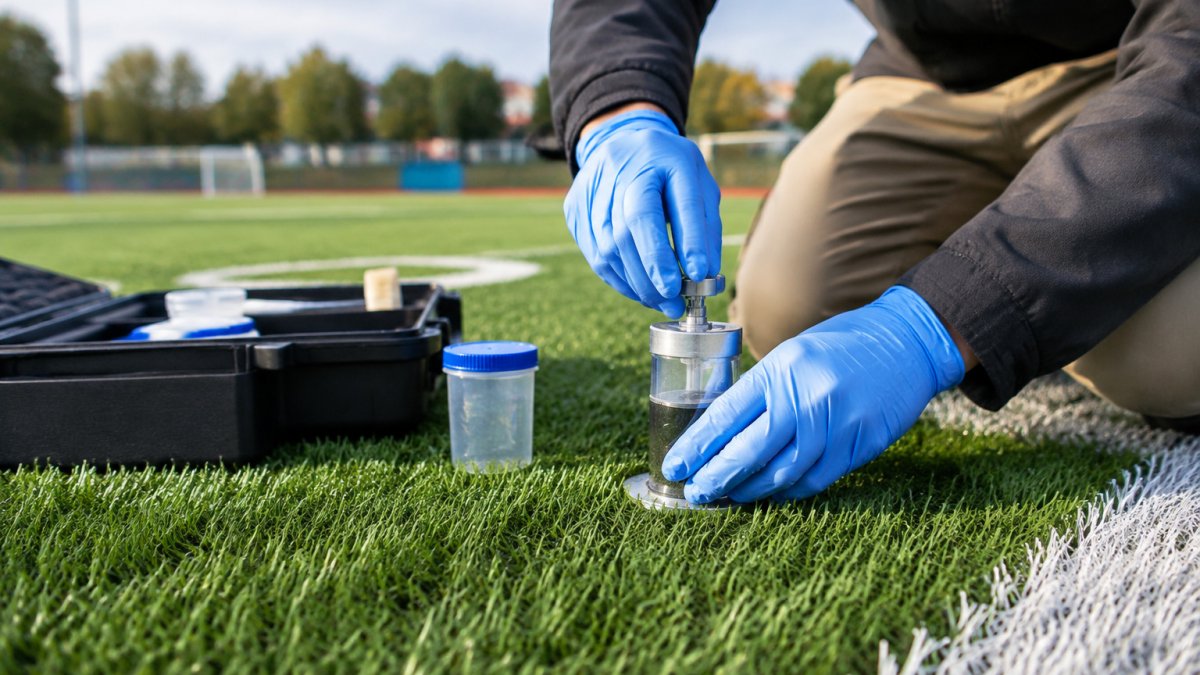
Synthetic turf safety depends on a few measurable numbers, including shock absorption (GMAX), surface temperature, drainage rate, and chemical content. Testing reports should document each of these so you can judge whether a field is safe to use.
- Shock absorption (GMAX) shows how much force an athlete absorbs on impact.
- Surface temperature matters because one 2025 case study measured a turf field 24.1 °C hotter than natural grass.
- Drainage rate shows how quickly water moves through the system.
- Ask for third-party testing that shows all turf components are PFAS-free.
- Check the specific standard your project must meet before setting a GMAX retest schedule.
Table of Contents
- What Synthetic Turf Safety Testing Data Measures
- GMAX Testing for Synthetic Turf: Frequency and Thresholds
- Finding and Reading Synthetic Turf Safety Testing Data PDFs, Including Chemical Testing
- Frequently Asked Questions
What Synthetic Turf Safety Testing Data Measures
Last Updated: November 10, 2026
Synthetic turf safety comes down to a few measurable numbers, and most of them come from impact and temperature testing. A 2025 case study in Sustainability measured an artificial turf field at 24.1 °C hotter than a natural grass field using an infrared thermometer (Artificial Turf Versus Natural Grass case study, Sustainability 2025). That gap is one reason heat belongs on your checklist.
- Shock absorption (GMAX): how much force an athlete absorbs on impact
- Surface temperature: how hot the playing surface gets in direct sun
- Drainage rate: how quickly water moves through the system
- Chemical content: which materials and PFAS-related components are present
The article names four measurable safety numbers that testing reports should cover.
| Measure | What it shows | Why it matters |
|---|---|---|
| Shock absorption (GMAX) | Force an athlete absorbs on impact | Core impact safety check |
| Surface temperature | How hot the surface gets in direct sun | Heat is a checklist item |
| Drainage rate | How quickly water moves through the system | Affects playability and upkeep |
| Chemical content | Materials and PFAS-related components present | Health and environmental concern |
GMAX Testing for Synthetic Turf: Frequency and Thresholds
GMAX is the standard measure of shock absorption on synthetic turf. The District of Columbia Department of General Services publishes field-level GMAX results and explains that the test shows how much shock an athlete absorbs on impact (DC Department of General Services 2026 GMAX test results).
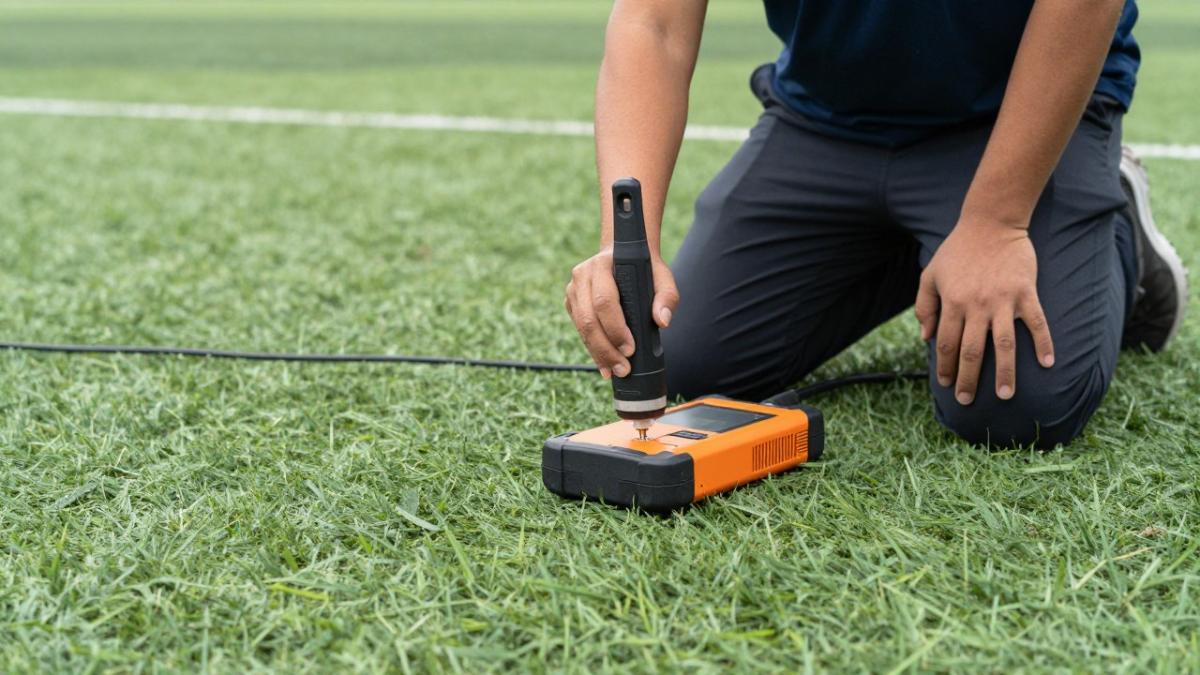
Testing frequency and acceptable limits depend on the field’s use and the agency or league that oversees it. Check the specific standard your project must meet before setting a retest schedule.
Finding and Reading Synthetic Turf Safety Testing Data PDFs, Including Chemical Testing
Most safety reports arrive as PDFs. Look for the test date, the field location, and the method used. Chemical testing deserves the same attention. The Institute for Exposomic Research advises asking for third-party testing that shows all turf components are PFAS-free (Institute for Exposomic Research turf guidance).
For more on GMAX testing, see 7 Steps to Improve Synthetic Turf GMAX Readings. You can also review the brochures and submittals for AirField Systems’ test documentation.
Frequently Asked Questions
What does GMAX testing measure on a synthetic turf field?
GMAX testing measures how much a synthetic turf surface absorbs impact. A testing device drops a weighted headform onto the surface and records the peak deceleration, expressed in g-units. Lower values mean the surface absorbs more shock, which can reduce the risk of head injury.
How often should synthetic turf be GMAX tested?
The supplied research does not establish a universal testing schedule, so check your field’s maintenance plan, warranty terms and local agency requirements. Many facility managers retest after major maintenance, infill top-ups, or a visible change in playing performance, and compare new results against the baseline from installation. Keep dated reports so you can show how surface performance has changed over time.
Where can I find synthetic turf safety testing data?
Start with public records from the municipal or school district that owns the field, since many agencies post GMAX reports online. Manufacturers and installers may also provide test reports on request. When a report is a PDF, confirm the test date, the test method, the testing laboratory and the specific field location, so you can compare results accurately.
