
Quick Summary
The best sustainable drainage for green roofs holds rainwater long enough to slow runoff while letting the surplus drain away before it saturates the roof. Mats, boards, and open-cell layers each trade water retention against flow capacity, so match the product to your retention goal, roof slope, and weight limits.
- Drainage must balance two jobs: holding rainwater to slow runoff and draining excess before saturation.
- Peer-reviewed research links substrate and drainage-layer choices to stormwater retention, leachate quality, and plant survival.
- Mats are light and flexible, suiting lighter roofs; boards offer more rigid support.
- Open-cell layers move water fast but hold less, so growing media can dry out in summer.
- Check the structural load limit, slope, and retention target before choosing a drainage layer.
Table of Contents
- How Green Roof Drainage Works and Where the Layers Fit
- Comparing Drainage Layers, Mats, and Boards for Stormwater Control
- Specifying Drainage for Your Next Green Roof Project
- Frequently Asked Questions
How Green Roof Drainage Works and Where the Layers Fit
Last Updated: November 6, 2026
The best sustainable drainage for green roofs does two jobs at once: it holds rainwater long enough to slow runoff, and it lets the excess drain away before it saturates the roof. Peer-reviewed research supports this balance. A 2022 peer-reviewed review of green roof influencing factors found that substrate and drainage-layer material choices significantly affect stormwater retention, leachate quality, and plant survival.
Think of the roof as a stack. Vegetation sits on top, growing media holds water and nutrients, and the drainage layer moves the surplus sideways toward outlets. Each layer has a job, and a weak link anywhere throws off the rest. Because drainage depends on how each layer handles excess water, turf infill for drainage offers a useful point of comparison when considering how different materials manage flow.
Comparing Drainage Layers, Mats, and Boards for Stormwater Control
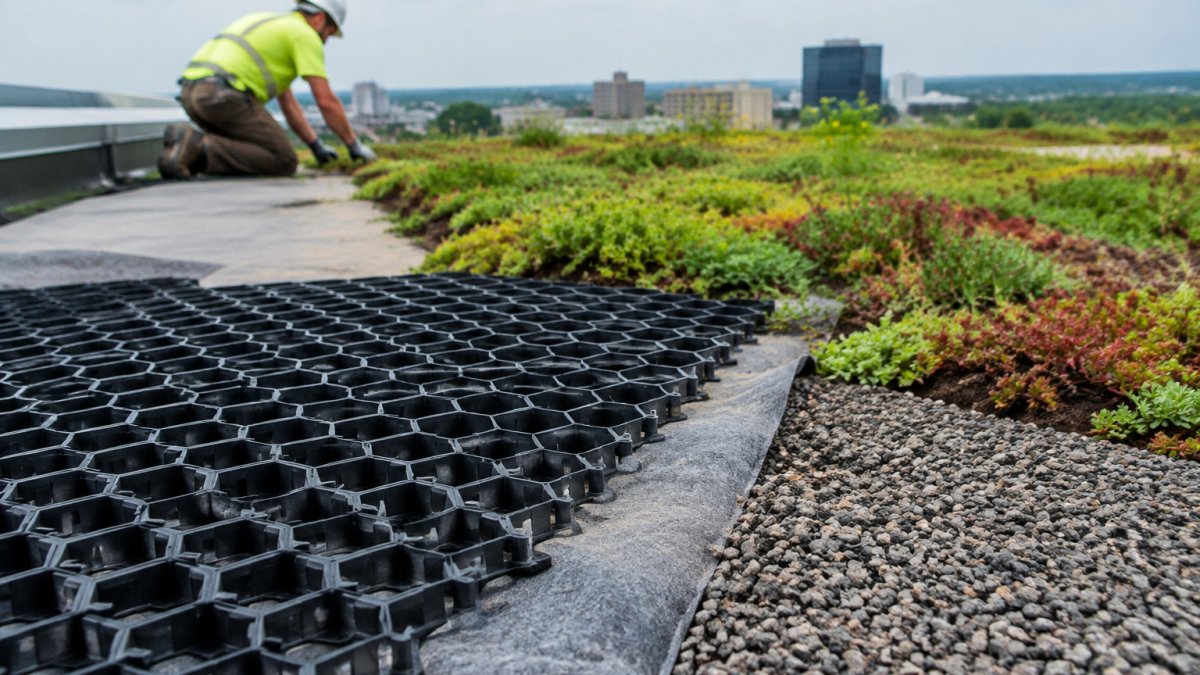
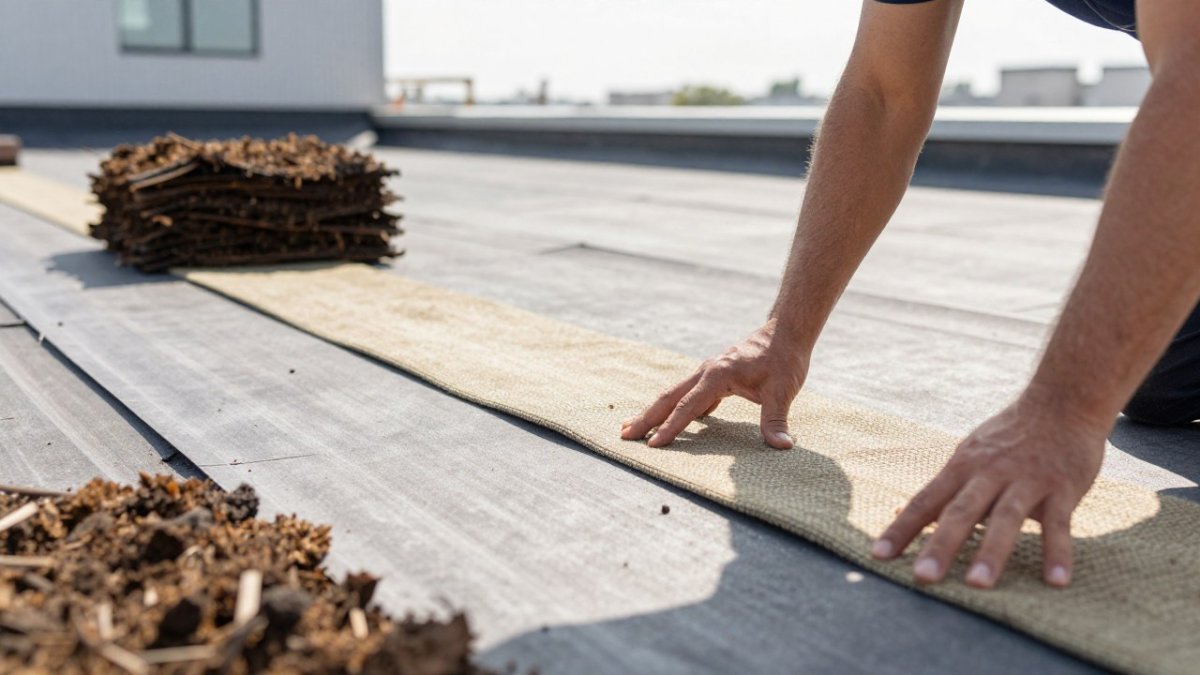
Drainage products generally fall into three types: mats, boards, and open-cell layers. To see the green roof drainage system with its air void and drainage performance, view the AirDrain product details. Each trades retention against flow capacity differently. Mats are light and flexible, which suits lighter roofs. Boards offer more rigid support. Open-cell layers move water fast but hold less.
Watch out: a drainage layer that moves water too quickly can leave growing media too dry in summer, so match the product to your retention goal.
Best for: projects where weight limits are tight and roof slope is adequate.
Skip if: you need maximum water holding on a flat roof with no slope.
!Landscape contractor laying a lightweight drainage mat across a sunny rooftop membrane, growing media stacked nearby
Specifying Drainage for Your Next Green Roof Project
Start with the roof itself. Check the structural load limit, the slope, and the retention target before choosing a layer.
Review the Minnesota Stormwater Manual design criteria for guidance on balancing retention with drainage capacity and wet-weight limits. Then request the product specification from your supplier, which you can copy into project documents with the specification section on porous paving.
For a rooftop example, see the AirDrain installation at Gallery 515. Plan logistics early as well: a practical guide to reducing drainage shipping costs can help your budget.
For current pricing, contact AirField Systems directly, since costs depend on quantity, dates, and delivery.
Frequently Asked Questions
Do green roofs need drainage?
Yes. Even a green roof that holds water well needs a path for excess rain to leave the roof. Without drainage, saturated growing media adds weight beyond the structure’s design limits and can drown plant roots. Drainage layers, mats or boards move surplus water to roof outlets while keeping a retained reservoir for vegetation. Designers usually balance retention against drainage capacity and maximum wet-weight limits, so the roof holds as much rain as it safely can.
How do green roofs reduce stormwater runoff?
Green roofs intercept rainfall in the vegetation and growing media, then release part of it slowly through evapotranspiration and controlled drainage. The effect depends on coverage and retention rates. Retention performance matters more than the roof’s area alone.
How often should green roof drains and outlets be inspected?
Inspect roof drains and outlets at least twice a year and after major storms, since clogged outlets are a common cause of green roof failure. Clear debris, check that filter layers and drainage mats are not blocked by fine growing media, and confirm overflow paths still discharge correctly. Records from each inspection help you spot trends, such as slow drainage after a particular season, before they become leaks or waterlogging problems.
