
Last Updated: November 1, 2026
Quick Summary
The most effective pet relief drainage combines three things: a surface that moves liquid away quickly, a base that will not hold water, and a rinse plan that keeps the area clean. Raised-grid artificial turf over a drainage base is a common choice, and it must be installed with a water test before use.
- Pet relief areas use raised turf, loose stone, or an engineered drainage layer.
- Raised-grid turf is comfortable under paws and lets water pass through.
- Confirm the drainage layer is installed before the turf goes down.
- Test the finished area with a hose to check for pooling.
- Rinse the drainage layer as well as the surface to control odor.
Table of Contents
The right drainage system does three things. It moves liquid away from the surface quickly. It keeps the base from holding water. And it makes the area easy to rinse. When one of these fails, the others suffer. A surface that drains well but has no rinse plan still lets odor build up in the base. A system that rinses well but drains slowly leaves puddles that breed smell.
At AirField Systems, we look at pet relief drainage as a system, not a single product. You can see the full K9 drainage approach on our K9 drainage page.
Choosing a Drainage System for Your Pet Relief Area
Most pet relief areas use one of three approaches: a raised turf base, loose stone, or an engineered drainage layer. Each one solves the wet-ground problem in a different way, and each comes with trade-offs in cost, comfort and upkeep.
Your choice depends on how the area will be used, how much traffic it gets and how much maintenance you can commit to. A busy shared run needs a different setup than a backyard used by one dog.
Raised-Grid Artificial Turf Over a Drainage Base
Raised-grid turf sits on top of a drainage base. The grid keeps the surface firm and raised, so water passes through rather than pooling.
Raised-grid turf is also comfortable under paws. BDA Architecture’s pet relief area design guidance describes it as having good drainage and being comfortable to walk on.
Watch out: a poorly built base can trap water under the grid, so confirm the drainage layer is installed before the turf goes down.
Loose Stone Versus Engineered Systems
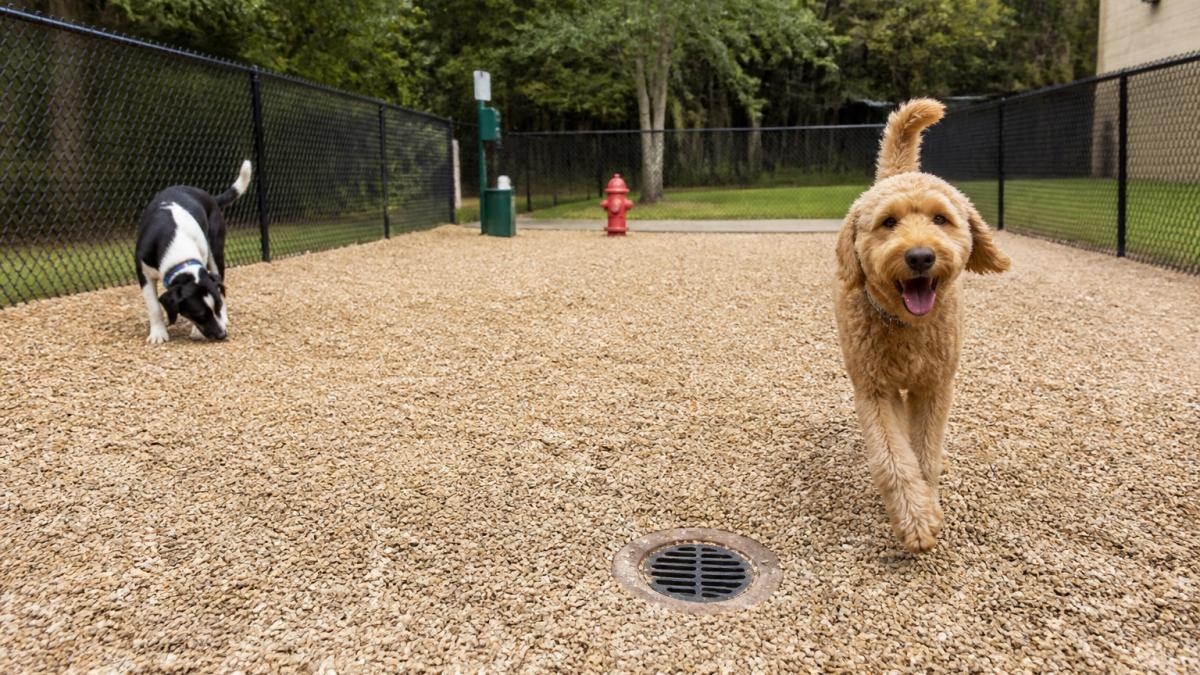
Loose stone is cheap and drains water fast. The downside is comfort and cleaning. Small stones can get stuck in paws, and the surface is harder to keep clean over time.
Step-by-Step: Installing an Artificial Grass Drainage Layer for Dogs
Start by marking the area and removing the top layer of soil. For the specific drainage liner and washing system used in this kind of install, see the AirDrain dog run drainage liner and washing system. Dig down far enough to fit the drainage base and a bit of grading. Plan for water to move toward one edge or a drain point.
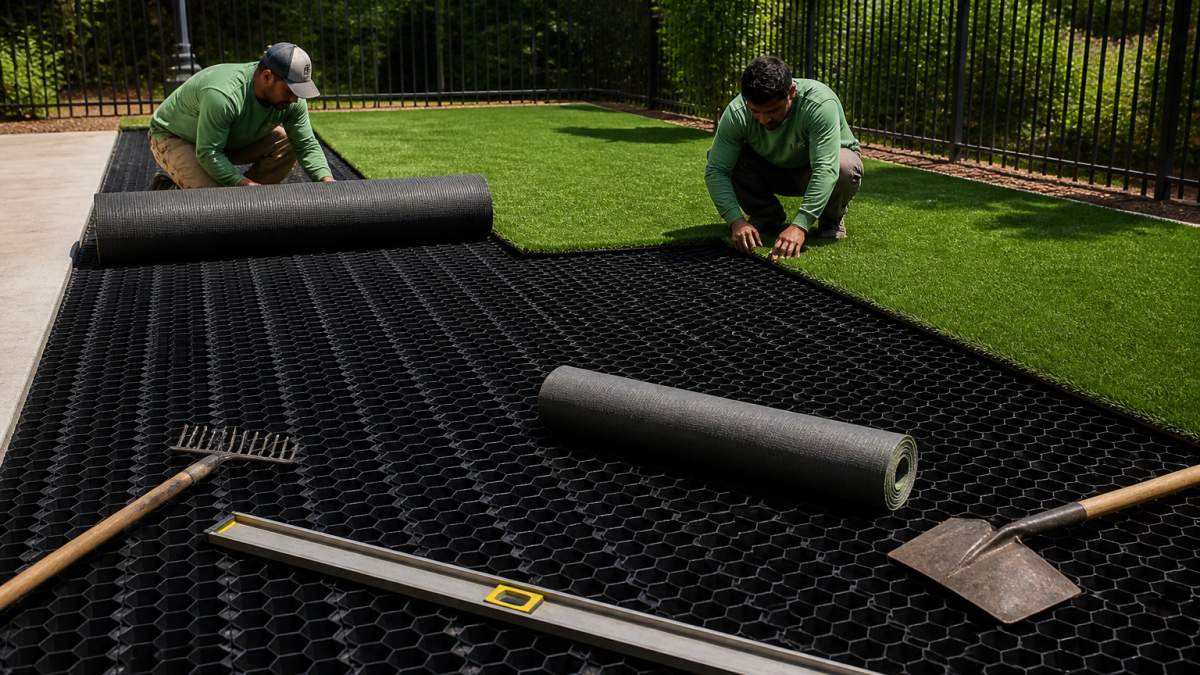
Next, lay the drainage base. Set the cells or panels in place and connect them so they lock together. Check that the surface is level enough for even drainage, but not so flat that water sits.
Then add the turf or surface layer and secure the edges. Test the area with a hose. Water should drain through without pooling. If it pools, lift the affected panels and check the base underneath.
Finally, set up a rinse or spray line so the area can be cleaned without tracking water across the yard. This step is easy to skip, and it is the one that keeps odor from building up later.
Watch out: skipping the test with water is a common mistake. Catching a pooling spot during install is easier than fixing it after the turf is down.
Pet Relief Area Design: Slope, Layout and Comfort
Slope gets the most attention in drainage design, but it has to be balanced against comfort. A steep slope drains fast but can make walking awkward for an animal. A flat surface is comfortable but holds water. Aim for a gentle grade that moves water toward the drain without feeling like a ramp. Achieving this subtle balance prevents standing water from saturating the surrounding soil, which is a critical step in addressing broader lawn drainage problems that often compromise the integrity of the entire yard.
Layout matters too. Put the relief zone where traffic is easy to manage, and keep it close enough to the drain that water does not have to travel far. You can see how pet relief areas are laid out in practice on our airport pet relief page.
Controlling Pet Turf Odor With Rinsing and Maintenance
Odor control is mostly a maintenance problem. Rinse the surface on a regular schedule, and flush the drainage layer as well as the top. Many owners rinse the turf but forget the base, and that is where the smell starts.
Keep a simple routine: rinse daily or as often as use requires, check drainage monthly, and inspect the edges for debris. A small investment in upkeep prevents the big cleanup later.
Scheduling Your Pet Relief Area Installation Walkthrough
Before you buy, walk through the install with a clear plan. Measure the space, decide where water will drain and confirm the base type you need. If you want to see a real project first, see our DIY pet relief area and dog run example.
When you are ready, reach out to AirField Systems to talk through your site and schedule a walkthrough. We can help you plan the layout, the base and the rinse setup so the area works from day one.
Frequently Asked Questions
How do you drain a synthetic turf pet relief area?
Use a permeable base of compacted crushed stone or a purpose-built drainage layer beneath the turf, and set the surface on a gentle, consistent grade so liquid moves downward and off the surface. Rinse the turf regularly with a hose or sprinkler to flush residue through the system. Avoid sealing the base with compacted fines, because trapped liquid is the most common cause of standing wet spots and odor. Confirm drainage performance with your supplier before installation, since results depend on soil conditions and usage. For current pricing or a quote on AirField Systems products, visit the AirField Systems website.
What base material works best for artificial grass drainage for dogs?
A clean, free-draining crushed stone base is the usual choice, paired with a drainage layer or geocell structure that keeps water moving away from the turf. Loose stone alone can drain well but may be uncomfortable for dogs and can shift or lodge in paws, so many designers add a stable, engineered layer on top. Choose a base that resists compaction and can be rinsed without washing out fines. Review your local landscape and drainage requirements, and ask your supplier to confirm the system suits your site.
How much slope should a pet relief area have?
Most drainage guidance points to a modest, consistent slope that moves water toward a drain or outlet without making the surface uncomfortable to stand on. Balance the grade against comfort and mobility. Test the layout with a long level and a hose before finalizing the base. If water pools in low spots after rain or rinsing, adjust the grade or the base layer before adding turf.
