
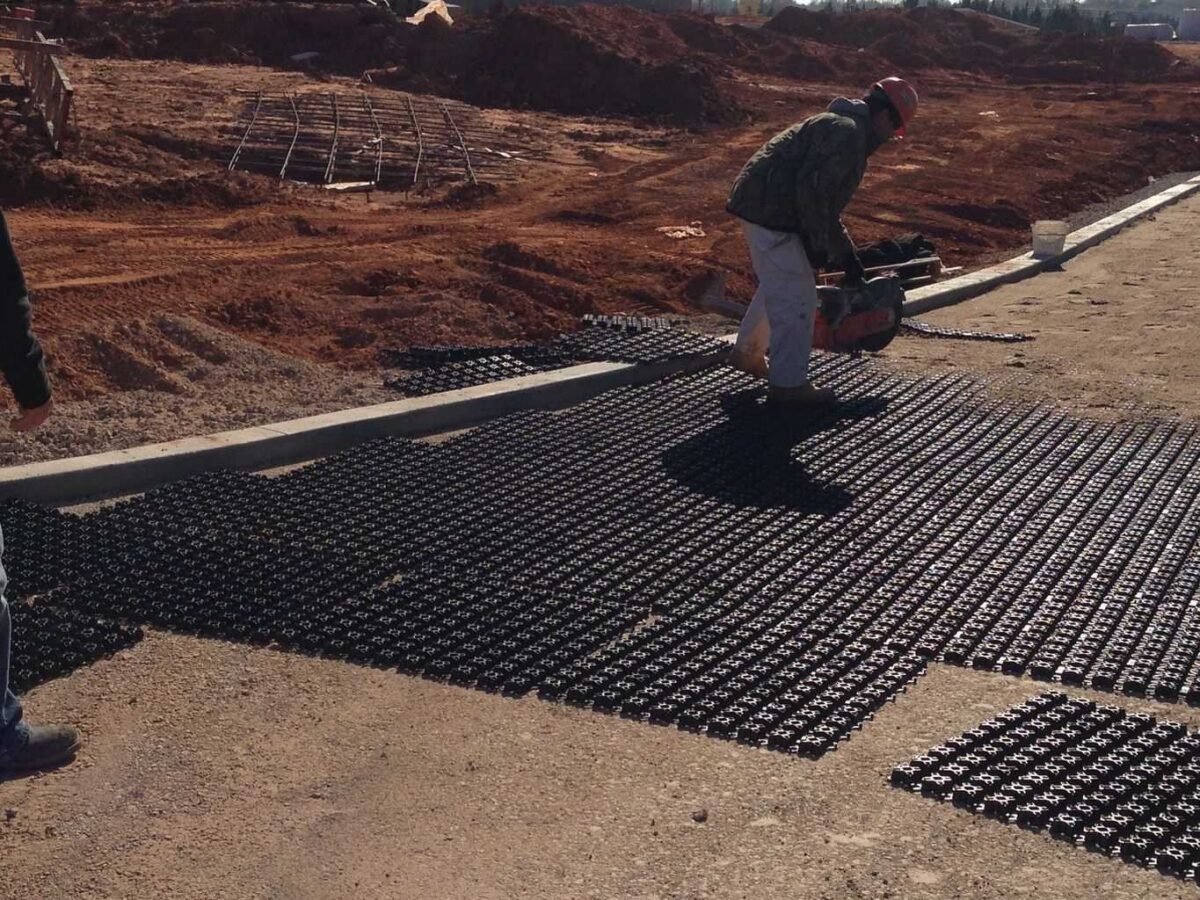
Last Updated: October 30, 2026
Quick Summary
A porous paving timeline runs 3-5 days in the field for a small patio under 500 sq ft, 6-10 days for a residential driveway, and 2-4 weeks for a commercial lot or fire lane, after permits. Pre-installation lead times for utility locating, permits, soil testing, and materials often stretch the schedule as much as the field work.
- Permits are the longest pole on most projects, with stormwater and grading review taking 1-6 weeks.
- Call 811 before excavation and confirm private utility marks, which can add days on commercial sites.
- Open-graded base must go in lifts and be compacted between each lift, adding passes to the schedule.
- Foot traffic is generally allowed once joints are filled and the surface is swept clean.
- Install silt fence and inlet protection before excavation, since sediment reaching the base or joints is costly to remove.
Table of Contents
- How Long Porous Paving Installation Actually Takes
- Permeable Paver Installation Time by Phase and Project Size
- Site Assessment, Permits and Utility Locating Lead Times
- The 7 Permeable Paving Installation Steps in Order
- Porous Paving Installation Checklist for Scheduling Day One
- Plan Your Porous Paving Schedule With AirField Systems
- Frequently Asked Questions
How Long Porous Paving Installation Actually Takes
Residential porous paving pours can finish in a matter of days, while commercial fire lanes and parking areas typically take longer, depending on site conditions. That spread is the whole story. A porous paving timeline guide only helps if it separates the fixed steps from the variables that stretch them.
AirField Systems has supplied porous flexible paving since 2002, and site conditions, not labor speed alone, set the schedule.
Porous paving is a paved surface built to let water pass straight through into the base below. It drains vertically instead of shedding runoff sideways.
Three things decide your calendar:
- How much excavation the subgrade needs
- Whether utilities sit under the footprint
- How long the base and joints take to stabilize
Get those right and the rest is routine.
Permeable Paver Installation Time by Phase and Project Size
Phase timing depends on square footage, access, and subgrade conditions, not just crew size. The flexible porous paving specification sets the technical requirements behind these phase durations. A small residential patio typically moves faster than a commercial lot with poor drainage and buried utilities. Porous systems add open-graded base layers and open-joint filling steps that conventional pavers skip.
|
Phase |
Small patio (under 500 sq ft) |
Residential driveway (500-1,200 sq ft) |
Commercial lot / fire lane (over 2,000 sq ft) |
Main variable |
|---|---|---|---|---|
|
Site assessment and permitting |
3-10 days |
1-3 weeks |
2-6 weeks |
Utility locating, local review, stormwater review |
|
Excavation and subgrade prep |
1 day |
1-2 days |
2-5 days |
Soil conditions, haul-off distance, access |
|
Base installation and compaction |
1-2 days |
2-3 days |
3-7 days |
Base depth, aggregate delivery, lift count |
|
Paver laying and cutting |
1-2 days |
2-4 days |
4-10 days |
Layout complexity, crew size, edge details |
|
Joint filling and final inspection |
Half day |
1 day |
1-2 days |
Surface area, joint material, curing |
|
Field total (after permits) |
3-5 days |
6-10 days |
2-4 weeks |
, |
Two porous-specific mechanisms stretch these windows compared with conventional pavers:
- Open-graded base goes in lifts. Open-graded aggregate base is placed in lifts and compacted between each lift. Each lift adds a pass, and skipping a lift to save a day is the most common cause of failed compaction tests and rework.
- Joint filling is slower and more careful. Open joints should be filled with appropriate joint material and swept so the joints stay permeable.
When the surface is ready for use. Joint filling and final inspection finish the field work, but readiness depends on the system and the joint material. Foot traffic is generally allowed once joints are filled and the surface is swept clean, and vehicle traffic should wait until the base and joints have settled. Confirm the manufacturer’s cure and traffic guidance before opening the surface, and keep construction traffic off the footprint until then.
Weather and seasonal scheduling. Rain during excavation and base work can saturate the subgrade and interfere with compaction, so base work is typically paused in wet conditions. Freezing temperatures can also affect compaction and joint filling.
Site Assessment, Permits and Utility Locating Lead Times
Pre-installation lead time often affects project schedules on porous projects as much as field work does.
The following factors commonly drive the pre-installation window:
|
Task |
Typical lead time |
What drives it |
|---|---|---|
|
Utility locate (811 call) |
2-10 business days |
Locate ticket volume, private vs. public utilities |
|
Stormwater / grading permit |
1-6 weeks |
Jurisdiction review, site plan detail, drainage calculations |
|
Soil infiltration and bearing tests |
3-10 days |
Lab turnaround, on-site percolation testing |
|
Design and spec review |
1-2 weeks |
System selection, base depth, edge restraints |
|
Material procurement |
1-3 weeks |
Aggregate availability, geocell or paver lead time |
Utility locating is the first domino. Call 811 before any excavation, and note that private utilities are not always marked by the public locate. On commercial sites, a private locate is often a separate paid step that adds days. Do not schedule excavation until marks are confirmed and, where required, the ticket is closed.
Permits are the longest pole on most projects. Porous systems can trigger stormwater review because the design relies on infiltration. Confirm current local requirements early, as review requirements vary by jurisdiction.
Soil testing is porous-specific. Unlike conventional pavers, a porous system depends on the subgrade infiltrating water. Test infiltration rate and bearing capacity before finalizing base depth, since soil conditions can affect the design.
Your pre-install checklist:
- Call 811 and confirm all marks, including private utilities
- Map slope and runoff paths across the site
- Test soil infiltration and bearing capacity
- Protect the footprint from construction traffic and sediment
- Stage sediment controls before any earthwork
Material lead times belong on the pre-install schedule. Confirm delivery dates for aggregate and other materials before mobilizing a crew, since missing materials can delay work. The brochures and submittals give you the testing and spec sheets inspectors ask for, and gathering them early avoids a last-minute scramble at inspection.
The 7 Permeable Paving Installation Steps in Order
Here is the sequence, start to finish. Each step feeds the next, so order matters more than speed. The steps below apply to AirPave porous flexible paving and similar systems.
- Site assessment and design. Confirm drainage, slope, and load requirements.
- Excavation and subgrade prep. Remove soil to the design depth and grade the subgrade.
- Base installation. Lay open-graded aggregate in lifts, not one deep dump.
- Base compaction. Compact each lift to the specified density.
- Paver selection and layout. Set edge restraints and plan the pattern.
- Paver laying and cutting. Place units, then cut and fit at edges and curves.
- Joint filling and final inspection. Fill joints, clean the surface, and check grading.
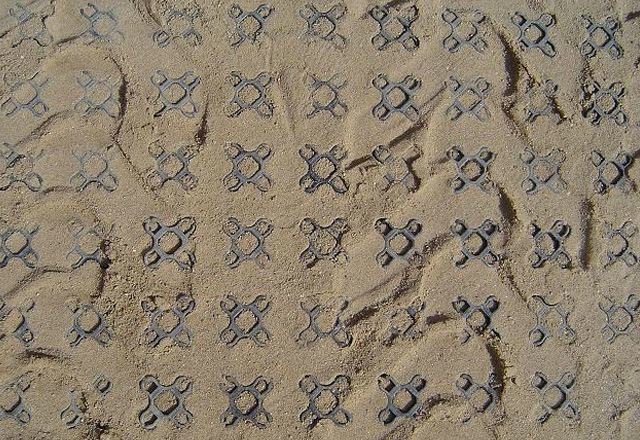
Construction crew spreading aggregate over a geocell grid during the porous paving timeline installation process
Porous Paving Installation Checklist for Scheduling Day One
Day one sets the tone. A slow start usually means a missed assessment or a missing permit.
Use this checklist before crews mobilize:
- Utility locate complete and marked
- Permits approved and on site
- Sediment controls installed around the footprint
- Aggregate and joint material staged
- Compactor and cutting tools on hand
- Crew briefed on the drainage plan
- Weather window checked for the full phase
Weather can delay work, so building schedule flexibility for shoulder-season projects is prudent.
Plan Your Porous Paving Schedule With AirField Systems
A realistic porous paving timeline comes down to honest phase planning, protected site conditions, and materials that install cleanly the first time. Our AirPave system uses patented quick connectors and a nesting design that simplifies assembly and shipping, with strength up to 6,747 psi sand-filled.
Browse our project portfolio to see completed installations.
Ready to plan your project? Contact AirField Systems to discuss your grass paving, fire lane, or parking project.
Frequently Asked Questions
How long does porous paving installation take?
Installation duration depends on square footage, subgrade condition, and utility conflicts, and pre-installation work for site assessment, permitting, and utility locating can take additional time. For specific timing on your project, contact AirField Systems for a quote. The porous paving timeline is driven less by laying pavers than by excavation, base compaction and weather windows.
What are the permeable paving installation steps in order?
The sequence runs: site assessment and design, permitting and utility locating, excavation to subgrade, subgrade preparation and compaction, open-graded aggregate base installation in lifts, paver laying with edge restraints, and joint filling with final inspection.
What weather conditions are best for installing porous paving?
Late spring through early fall works best, when temperatures stay consistently above freezing. Cold weather slows compaction and can trap moisture in the base, while heavy rain saturates the subgrade and halts excavation. Installers should also protect the treatment area from sediment during construction so fines do not clog the system before it is even in service.
How long before a porous paved area can be used?
Traffic timing depends on the system and joint material, so confirm the manufacturer’s guidance before opening the surface to foot or vehicle traffic. Check with your installer and the project engineer before opening the surface, and keep construction equipment off it until then.
Your schedule is only as solid as the system you install. AirField Systems builds 100% recycled geocell paving with 100% vertical drainage, patented quick connectors, and a nesting design that simplifies shipping and assembly. Get started with AirField Systems and put your porous paving project on a timeline you can trust.
